
San Diego living is all about the outdoors. Whether you are hosting a sunset dinner on your patio in Chula Vista or keeping your pool running in Escondido, our yards are an extension of our homes. However, electricity and the elements—like morning dew, coastal salt air, and occasional heavy rains—don’t always play well together. Taking a few moments to check your exterior electrical setup can help ensure your outdoor oasis stays safe for your family and guests.
If you have noticed flickering patio lights, warm outlets, or a tripped breaker that won't reset, it is important to address these signs early to prevent more serious hazards. Reach out to Total Plumbing Air Electric at (858) 533-2629 or use our online contact form so we can help you keep your backyard safe and powered up.
The Lifesaver You Need to Know: GFCI Outlets
When it comes to outdoor safety, the most important term to learn is GFCI. This stands for Ground Fault Circuit Interrupter. These are the special outlets you often see in bathrooms and kitchens with the "test" and "reset" buttons in the middle. Their job is to monitor the flow of electricity and shut off the power instantly if they detect that the current is "leaking" where it shouldn't—like through water or a person.
In San Diego, every outdoor outlet should be a GFCI-protected outlet. Because these outlets live outside, they are exposed to moisture and humidity that can cause a standard outlet to spark or short-circuit. Testing these buttons once a month is a great habit. If the "reset" button won't stay pushed in, it means the outlet has detected a problem and is doing its job by staying off.
- Look for the buttons: If your outdoor outlet doesn't have "test" and "reset" buttons, it needs to be updated.
- Test regularly: Press the test button to ensure it clicks and cuts power.
- Cover up: Every outdoor outlet should have a weatherproof cover that stays closed even when something is plugged in.
Safe Use of Extension Cords Outdoors
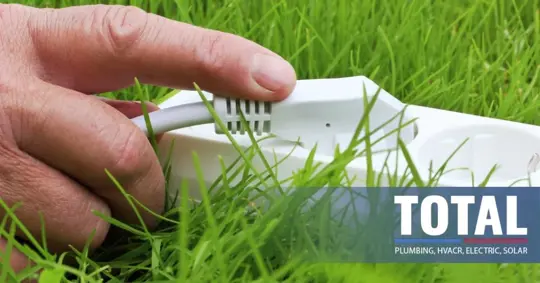
Extension cords are handy for holiday lights or plugging in a leaf blower, but they are meant to be temporary. A common mistake is leaving a "temporary" cord outside for months. The sun’s rays can crack the plastic coating, and the salt in our coastal air can corrode the metal prongs inside. This creates a risk of fire or shock that is easy to avoid.
Always check that the cord you are using is labeled for "Outdoor Use." These cords have thicker insulation designed to handle temperature changes and moisture. If you find yourself needing an extension cord for a patio TV or a fountain every single day, it is much safer to have a professional install a dedicated outdoor outlet instead.
- Check for damage: Never use a cord that is frayed, taped, or missing a grounding prong (the third prong).
- Avoid "daisy-chaining": Do not plug one extension cord into another; this can cause the cords to overheat.
- Keep it dry: Keep the connection points off the ground where water might puddle after a sprinkler cycle.
Protecting Your Pool and Spa Areas
Water and electricity are a dangerous combination, which is why pool and hot tub areas require extra attention. In San Diego, many older homes have pools with lighting or pumps that may not meet modern safety codes. The most important rule is the "10-foot rule": keep all portable electronics, like speakers or phone chargers, at least 10 feet away from the water’s edge.
If your pool light is flickering or if you feel a slight "tingle" when touching metal railings near the water, turn off the power at the electrical panel immediately. These are serious warning signs that electricity is leaking into the water. Regular check-ups of your pool’s bonding and grounding systems can help prevent these scary situations.
- Use battery power: Whenever possible, use battery-powered devices near the pool instead of plugged-in devices.
- Check the pump: Ensure your pool pump is properly grounded and that the wires are enclosed in a protective pipe (conduit).
- Light safety: If you have underwater lights, ensure the seals are tight, and no water is getting behind the lens.
Lighting and Landscaping Safety
Outdoor lighting adds a beautiful glow to San Diego nights, but it needs to be installed correctly to stay safe. Low-voltage lighting (usually 12 volts) is much safer for DIY landscaping projects than standard "line voltage" (120 volts). If a shovel accidentally hits a low-voltage wire while you are gardening, it is much less likely to cause a dangerous shock.
However, even low-voltage systems need maintenance. Over time, the wires can become exposed as soil shifts or pets dig. If you notice wires poking out of the ground, they should be re-buried or protected. For larger projects, like high-powered security lights or outdoor kitchen appliances, you will likely need a more complex electrical repair or installation to ensure your home's system can handle the extra load.
- Buried wires: Ensure any high-voltage wires are buried deep enough and protected by a metal or plastic pipe.
- Ladder safety: When hanging lights or cleaning gutters, always use a fiberglass or wooden ladder; metal ladders can conduct electricity if they come into contact with a wire.
- LED benefits: Switch to LED bulbs for outdoor lights; they stay much cooler than old halogen bulbs and use less energy.
Monitoring Your Electrical Panel
The heart of your home’s electrical system is the breaker box or electrical panel. This is where the power from the utility company enters your house and is divided up. If you find that your outdoor breakers are tripping often, it usually means you are trying to pull too much power at once, or there is a "short" somewhere in the outdoor wiring.
Many older San Diego homes have panels that weren't designed for the high-tech outdoor kitchens and powerful hot tubs we use today. If your panel is making a buzzing sound or looks rusty, it can’t do its job of protecting your home from power surges. Keeping this central hub in good shape is the best way to protect every outlet and light in your yard.
- Label your breakers: Make sure you know which switch controls the patio, the pool, and the garage.
- Look for rust: San Diego’s salt air can cause exterior panels to rust over time.
- Don't ignore trips: A breaker that trips once is a warning; a breaker that trips twice is a problem that needs an inspection.
Staying Safe While Enjoying the Sun
Outdoor electrical safety doesn't have to be complicated. By using GFCIs, choosing the right cords, and keeping an eye on your pool area, you can prevent the most common hazards. It is all about being aware of your surroundings and not taking "shortcuts" when it comes to power. This proactive approach keeps the focus on fun and relaxation.
At Total Plumbing Air Electric, we love the San Diego lifestyle just as much as you do. We are here to help you make sense of your home’s electrical needs, whether you are planning a new patio project or just want to make sure your current setup is safe for the kids. Our goal is to provide helpful information so you can make the best choices for your family's comfort and safety.
If you have questions about your outdoor outlets or want an inspection of your home's electrical system, Total Plumbing Air Electric is here to help. Contact us via our online form or call us at (858) 533-2629 to learn more about how we can help you stay safe and powered up under the San Diego sun.